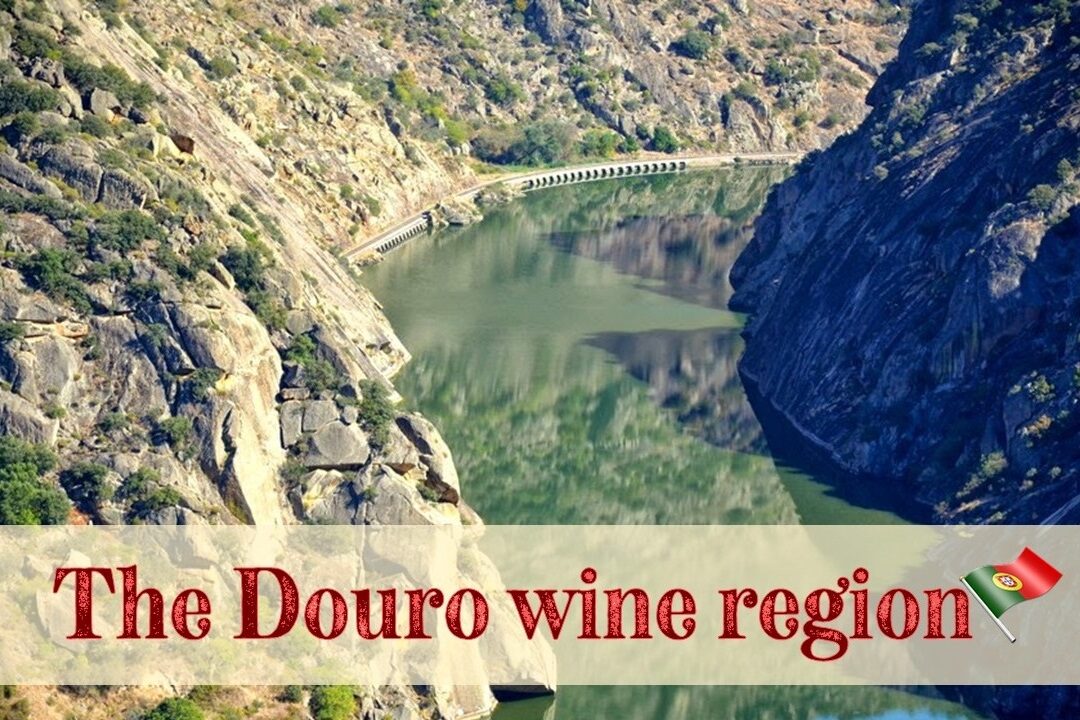
The Douro is one of the wildest regions of the national territory, carved by the valley of the river Douro and the poverty of schist soils.
Nowhere else in Portugal is man’s intervention in the landscape so evident, visible on the thousands of terraces scattered throughout the region, challenging the severity of the steep slopes where the vineyards are located. For its beauty and monumentality, the region was recognized by UNESCO as “World Heritage”.
The Douro region of northern Portugal is the home of the Port wines. It takes its name from the Douro river, which flows east to west from the Spanish border to Porto city, where it meets the Atlantic Ocean.
Though the Douro region is best known for its fortified wines, total production here is fairly evenly split between Port and non-fortified table wines.
Location
The Douro is a Portuguese wine region, is situated in north-eastern Portugal and centered on the Douro River. The region is extending from the border with Spain to about ninety kilometers away from the city of Porto. It is sometimes referred to as the Alto Douro (upper Douro), as it is located some distance upstream from Porto, sheltered by mountain ranges from coastal influence.

The total region covers some 250,000 hectares, but only 15% (some 38,000 hectares) are planted with vines and only 26,000 hectares of that are authorized for Port wine production. As you’d expect in such a hot climate, most of the wines made here (around 90%) are red, with the rest divided more or less equally between whites and rosés.
The traditional vineyard scenery, dominated by the old, narrow, stone-walled terraces, has changed in many places, though preserved in the central section of the region by World Heritage Site status. On gentler slopes, modern vineyards are generally planted vertically, dispensing altogether with terracing. The Douro Valley is probably the last of the world’s major wine regions still to be pressing significant quantities of its grapes by foot – in shallow, open wine-fermenters, called Lagares. But recent years have seen the widespread introduction of ‘robotic Lagares’ designed to simulate the gentle action of the human foot.
History
There is archaeological evidence for winemaking in the region dating from the end of the Western Roman Empire, during the 3rd and 4th centuries, although grape seeds have also been found at older archaeological sites.
In Medieval times from the mid-12th century, Cistercians had an important influence on winemaking in the region, also through their three monasteries.
In the 17th century, the region’s vineyards expanded, and the earliest known mention of Port wine dates from 1675. The Methuen Treaty between Portugal and England in 1703 and the subsequent establishment of many British Port lodges in Porto meant that Port wine became the primary product of the region, and it became economically very important to Portugal. As part of the regulation of the production and trade of this valuable commodity, a royal Portuguese charter of 10 September 1756 defined the production region for Port wine. It thus became the world’s first wine region to have a formal demarcation. The vineyards covered by this demarcation were situated in the western part of the present region. Later, the vineyards have progressively expanded to the east into hotter and drier areas.
The Douro was not spared from the vine diseases of the 19th century, Powdery mildew struck in 1852 and Phylloxera in 1863.
While table wine has always been produced in the region, for a long time little of it was seen outside the region itself. The Port lodges were focused on the production and export of Port wine, which was their unique product on the export market and had little interest in other wine styles. Thus, while the wines could be good, for a long time, there was no attempt to use the Douro grapes to produce more ambitious table wine.
The person credited with creating the first ambitious Douro wine is Fernando Nicolau de Almeida, who worked as an oenologist with the Port house Ferreira. He visited Bordeaux during World War II, which gave him inspiration for creating a top-quality table wine. The wine Barca Velha, first produced in 1952 using grapes from Quinta do Vale de Meão situated in the Douro Superior sub-region, was the result. Barca Velha didn’t immediately get many followers, since most Port wine houses remained uninterested in non-fortified wines for a long time. A few more ambitious Douro wines made their appearance from the 1970s, but it was not until the 1990s when a large number of wines made their appearance.
A contributing factor was Portugal’s entry into the European Economic Community in 1986, which meant that the Port lodges’ monopoly was abolished, thus paving the way for producers in the Douro valley to produce and bottle their own wine – Port or dry Douro wines. At this stage, several Port houses also introduced Douro wines into their range.
In 1979, the Douro’s official demarcation was extended to include still wines along with fortified wines, and in the 1990s, production increased considerably. Today, Douro makes some of Portugal’s most prestigious red table wines from the area’s array of indigenous grape varieties.
The Douro winemaking region was declared a World Heritage Site in 2001.
The river has had an enormous impact on the region, not just in terms of the terrain, but also in making the terroir accessible to human enterprise. The Port wines were shipped in barrels down the river to Porto on small boats called Rabelos, where they would be aged in cellars at Vila Nova de Gaia.
In the late 19th century, the upper reaches of the Douro Valley were a treacherous place to visit. The place was remote and it took days to get there by land from Porto. In 1861, Joseph Forrester, the British wine merchant and mapmaker, was drowned when his boat capsized: the powerful current and gold sovereigns in his moneybelt dragged him under the water. The ladies traveling with him survived, apparently because their fashionable crinolines kept them afloat.
Twelve years after Forrester’s death, work began on a single-track railway line that stretched from Porto towards the Spanish border, via around two dozen tunnels and even more bridges, and through what is now a Unesco World Heritage site. The railway was revolutionary, giving access to the vineyards from the city (and vice versa).
While the boats have long been replaced with trucks, the cellars at Vila Nova de Gaia remain and are still used for the maturation of Port wines.
The Douro is a ‘Port country’, though today sweet, fortified wine isn’t its only vinous output: the region also has a growing reputation for excellent red and white wine.
DOC
The Douro is the oldest wine region in the world. The Douro Demarcated Wine Region dates back to 1756 and was established in the reign of King José I by his minister Marquês de Pombal.
The region has Portugal’s highest wine classification as a Denominação de Origem Controlada (DOC). While the region is associated primarily with Port wine production, the Douro produces just as much table wine (non-fortified wines) as it does fortified wine. The non-fortified wines are typically referred to as “Douro wines”.
There are three recognized subregions of the Douro, each covering a section of the river as it flows toward Porto city, covering different aspects of the area’s hot continental climate.

To the east, towards the Spanish border, the Douro Superior region is the furthest inland. This emerging subregion is covered in terraced vineyards and takes up about 20 percent of available vineyard land in the Douro. This is the largest sub-region, is the hottest, driest and most extreme, but also the least rugged, marked by dryness and hellish summers. Vine-growing here has historically been limited and sparse. However, there has been considerable planting in recent years, as producers have begun to comprehend the potential of this slumbering region.
The central part of the Douro region, centered on the village of Pinhão, is known as the Cima (Alto) Corgo region, where most high-end Vintage Port originates. Cima Corgo is the largest of the Douro’s three subregions and accounts for almost half of the valley’s total wine production. The steep vineyards of Cima Corgo are predominantly composed of schist with sizable granite deposits. Vines nearer the river tend to ripen much earlier than those at higher elevations, as the river holds warmth more readily than the air.
The nearest part to Porto and the coast is the Baixo Corgo subregion, the area best suited to the production of table wines. The Baixa Corgo is the smallest of the three subregions but has the greatest concentration of vineyards. The area is cooler and wetter than its neighbors, but also more accessible, meaning that more bulk-wine operations are possible. This is the western-most area and is also the coolest of the three subregions, influenced by the sea, so its wines are a little lighter.
The precise figure is difficult to establish, but roughly 45% of what is produced in the Douro is sold as table wine rather than Port wine.
Douro table wines have had their own classification (DOC) since 1979, but it’s only in the last 10 years that they’ve begun to take off. Temperature controlled fermentation has been a boon to quality, as has the gentler extraction of tannins. The other big change is that producers have started using some of their best grapes to make table wines, rather than reserving them for their Port wines. In some cases, they have planted new vineyards in cooler areas that are better suited to table wine production.
The result is that, almost from nowhere, the Douro Valley has become one of the most exciting red wine areas on the planet. It’s taken the Douro Valley centuries to make world-class table wines, but as a mature bottle of great Vintage Port, they’ve been worth the wait.
Soil & climate
The climate of the Douro Valley is influenced by the surrounding mountain ranges, the heavily mountainous region is protected from the Atlantic influence by the Mountain of Marão. Crucially, these protect the region from the humid, westerly winds blowing off the Atlantic Ocean. The weather in Porto and on the other side of the Marão Pass can be dramatically different. Temperatures in the Douro Valley can hit 45°C in summer, which are 15 to 20°C warmer than coastal Porto.
The weather is usually dry, with cold winters and extremely hot summers, bringing unique features to these soils, which are beneficial to the longevity of the vineyards and bring more concentrated musts in sugar and color.
The region is subdivided into three subregions with different circumstances:
– Baixo Corgo, a subregion with the mildest climate and most precipitation. It has 14,000 hectares of vineyards. Although it is the subregion that was planted first, in general, it is considered to give wines of lesser quality than the other two subregions.
– Cima Corgo is the largest subregion with 19,000 hectares of vineyards, centered on the village of Pinhão, and where the majority of the famous Quintas are located.
– Douro Superior is the hottest and driest of the subregions and stretches all the way to the Spanish border. It has 8,700 hectares of vineyards and is the source of many wines of very good quality. As it is the least accessible of the three subregions, it is the most recently planted, and it is still expanding.
The human intervention in the landscape is all too apparent, visible in thousands of terraces. Terraced vineyards are very common in the Douro region. Vineyards dedicated to Port production are usually planted on schist while areas with granite-based soils are used for table wine production.

Typically, the vineyards stretch up the steep, dry slopes on either side of the river and its myriad tributaries on narrow rocky terraces – a sight that has been classified as a Unesco World Heritage site in 2001. Its beauty comes from the monumentality of its steep slopes.
The vineyards of the Douro rise steeply above the river at inclines of up to 45 degrees as part of an amazing riverine landscape. The old-growth vines struggle to find water in a region that knows very low annual rainfall. All of the plant’s energy is concentrated on the fruit. The unforgiving terrain restricts the use of mechanized labor and forces nearly all viticultural operations to be performed by hand.
Grapes
The Douro is one of the richest regions in indigenous grape varieties, with hundreds of unique varieties and an extensive area of old vineyards, sometimes planted with dozens of mixed varieties. The grape varieties cultivated in the region are famous for their secular history. Some varieties come from the Middle Ages.
Among the hundreds of grape varieties, five red varieties stand out, that are the best ones for the production of Port Wine are: Tinta Barroca, Tinta Roriz, Tinto Cão, Touriga Franca and Touriga Nacional.
The white grape varieties Gouveio, Malvasia Fina, Moscatel, Rabigato and Viosinho also stand out.
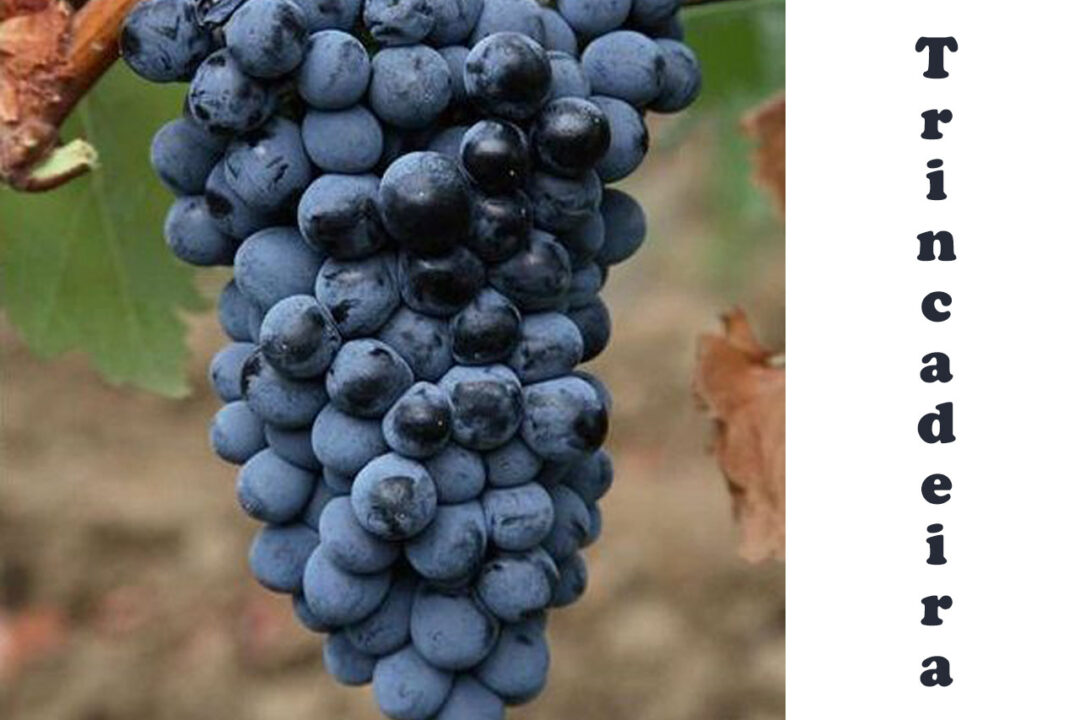
And there are also other varieties extremely important in the region, such as Tinta Amarela (Trincadeira) and Souzão.
For the production of Moscatel, the planted variety is Moscatel Galego.
A number of international varieties have also found a home in the Douro valley, particularly for the production of table wines. Cabernet Sauvignon, Sauvignon Blanc and Gewürztraminer are among the more common non-native grapes planted here.

Some vineyards still have a traditional blend of varieties. There are winemakers who see the grape variety mix as the key to top quality. Others maintain that the best grapes for unfortified wines are three of the varieties grown nowadays in modern, single-variety vineyards for Port wines: Touriga Nacional, Touriga Franca and Tinta Roriz; some also favor Sousão (or Vinhão) for the welcome acidity it brings.
For wine lovers who are bored of the so-called Big Four grapes (Chardonnay, Sauvignon Blanc, Cabernet Sauvignon and Syrah/Shiraz), the Douro Valley makes a wonderful change.
Wines
It is in the Douro that Port Wine is born, the main ambassador of national wines, supported in the last two decades by the still wines of the Douro that have gained consideration and independence, asserting itself today as a source of increased notoriety for the region.
The name of “Port wine” is explained by the fact that the wine is stored at and commercialized from the port located between the cities of Porto and Vila Nova de Gaia. The wine went down the river in the typical “Rabelo” boats and was aged in the storehouses of Vila Nova de Gaia since this region shows a little variation of temperature throughout the year.

Although for centuries, Douro growers have been supplying an eager world with Port wines, nowadays the wine experts the world over recognize that the Douro region also offers ideal conditions for making unfortified wines of the highest quality, both red and white.
Long famous as the source of Port wine, the Douro is now also renowned for its fine, rich unfortified wines, both red and white.
Producers here are crafting stunning and highly distinctive wines that rank amongst Portugal’s most intense and complex. There are separate DOCs for unfortified wine and for Port wines in the Douro, although geographically both lie within the same outer boundaries.
The style of wines produced in the Douro range from light, Bordeaux-style claret to rich Burgundian-style wines aged in new oak.
The Douro’s wines – both still and fortified – can be made from more than 80 different grape varieties, but in practice, the vineyards are dominated by five key varieties, as I mentioned above.
The best Douro whites can be surprisingly good, especially if they are grown in the higher, cooler areas, but it’s the red wines (both Port and table wines) that are really exciting.
All of the top 5 grape varieties are recommended for future plantings and are used extensively by all of the leading producers in the valley. Each has a different personality: Touriga Nacional is powerful, structured and deeply colored, Touriga Francesa is fruity and perfumed, Tinta Barroca is robust and sweet, Tinta Roriz is elegant and long on the palate, while Tinto Cão is spicy and concentrated.
Almost all the Douro reds are blended wines.
The Port Wine
The base wine for Port is made and fortified in wineries in the Douro Valley, then transported to the Port lodges of Vila Nova de Gaia, opposite Porto city, at the mouth of the river, for aging.
The Port wines come in a variety of styles, from young, fruity white, tawny and ruby to the finest and most expensive, vintage Ports and aged tawnies.
There are lots of different styles of Port, but the easiest way to remember them is to divide them into two groups: bottle-aged and wood-aged. All Port wines see some time in wood, but some spend much more time than others.
Wood-aged styles include Ruby, Premium Ruby, Reserve, Late Bottled Vintage (LBV), Tawny and Colheita (essentially a vintage-dated Tawny).
Bottle-matured styles, which tend to be more robust and long-lived include Crusted, Single Quinta (single estate wines from so-called ‘off vintages) and the Vintage.

Vintage Port is made in the best years and is bottled after only two years in barrel, keeping it rich and red. Vintage Port will benefit from aging in bottle to add complexity.
The Single Quinta Vintage Ports come from individual estates. The Colheita Ports also come from a single, stated year, but are aged for a minimum of seven years in barrel before bottling.
Tawny Port that specifies the number of years on the label (10, 20, 30, 40) is paler in color, more mellow, and subtle and complex from long aging in barrel.
Vintage Port is the peak of what the region produces, although aged Tawnies come close. The Vintage Port wines are subsequently matured in bottle for a decade or more. They are only made in declared years and even then account for only 1% of total production. There is general agreement about the best harvests, but declarations vary slightly from house to house.
Names to look out for include Graham, Taylor, Quinta do Noval, Niepoort, Croft, Calem, Churchill, Quinta do Portal, Fonseca and Ferreira.
Wine tourism
I recommend beginning a trip to the Douro with a night in Porto itself. Portugal’s second-largest city is picturesque, with narrow streets rising from the river. Take a boat trip on the river, cross the Dom Luís I Bridge over the river, designed by Gustave Eiffel, drink white port with tonic, and eat seafood in one of the local restaurants that overlook the river.
Then take a walk around Vila Nova de Gaia, which faces Porto on the opposite bank of the Douro. There you will find the lodges where Port wine is aged. And you can see the old Rabelo boats on the river, the vessels that carried the wine from the Quintas.
Once you’ve discovered the city, it’s time to discover the Douro region. Take a wine tour at a vineyard, sit on the veranda of an old Quinta – estate – and simply just enjoy the scenery while tasting the winery’s wines.
The Douro valley in northern Portugal has more than just the perfect climate and soil for cultivating grapes and a wine-producing culture that dates back centuries. There are plenty of things to see and do within the Douro in terms of food, wine, culture and history.

The Douro wine region is the birthplace of this world-famous fortified wine so this is definitely the place to visit to learn about its grapes, which grow on the steep man-made terraced vineyards of the valley, its production and to take part in an original Port wine tasting, at one or more Quintas in the area.
For centuries, the Douro wine region in Portugal was difficult to reach: it was isolated, and the challenging trip along the river, down winding roads, was not for the faint of heart. Luckily for the Portuguese and Port wine lovers, the journey is not so difficult anymore; on the contrary, nowadays, the Douro Valley can be easily reached by car, train, helicopter or river cruise.
So, why are you waiting?
No Comments Found