For all wine enthusiasts, the time will come when you will discover fortified wines: Port, Sherry, Muscat, Marsala and Madeira. In fact, most fortified wines these days are not in fashion for a variety of reasons, probably because they are considered too heavy or too sweet. Nevertheless, the interest remains for a minority who no doubt prefer to keep it.
This time we take a closer look at Madeira wine.
Madeira wine is a liqueur wine with almost unlimited storage capacity that can survive for more than two centuries.
Madeira is unique not only for its amazing sweetness and textured mouth but also for its ability to endure. Most wines in the world oxidize when left open, giving you a tasteless, pungent liquid. And this is the cool part! Madeira doesn’t change, alter or shift when left open…at all!
The legend
Madeira wine, as we know, was accidentally discovered in the 15th century. The Portuguese island of Madeira, located in the Atlantic Ocean, was an important refueling port for ships to pass through old shipping lanes. Madeira wines were picked up as food on board and brandy was added to each wine barrel to improve its durability during the long sea voyages. It has been found that the heat of the ship’s hold has dramatically improved the wines, made them richer and more complex, and stable and able to mature almost indefinitely.

In the 18th century, winemakers experimented with repeating this process on land. Initially, the heat of the sun was simply used to heat the barrels. This is called the Canteiro process and continues to be used. Today, after enrichment with 96% grape spirit, the wine is left in barrels of various sizes, usually 300 to 650 liters, in houses where the temperature can reach 30 ° C and the humidity can be as high as 90%. During the process, around 4 – 5% is lost by evaporation.
Later, special ovens, “estufas” were made to heat the barrel wine. The Estufa process has been modified in recent years. The wines are now kept mainly in stainless steel tanks, which are heated by “jackets” containing hot water. This allows the wine to be kept at the required temperature of 45 to 50 ° C for three months. Modern estufas can be large, between 20,000 and 100,000 liters. After heating, the wines are allowed to cool down gradually.
After the Canteiro or Estufa process, the wines are thoroughly examined for quality and further aging.
The length of time a wine is left to age is a decision based on quality and the style of wine required. The wine is aged in old wooden barrels and then offered in the form of 3, 5, 10 or 15-year-old wine, and the best is offered in the form of vintage Madeira after at least 20 years of the barrel aging.
Madeira wines are without a doubt the longest lasting quality wines. The vintage Madeira can last for at least a century, and then once opened the wine can be enjoyed, resealed and stored for months without spoilage.
History
The word Madeira means “wood” in Portuguese, and the island is named because of its many trees. The island is a part of the Portuguese archipelago in the Atlantic Ocean and includes the inhabited islands of Madeira and Porto Santo, as well as two uninhabited islands, “Ilhas Desertas” and “Ilhas Selvagens”. The island of Madeira itself is actually the peak of a 4,000-meter underwater volcano.
The climate ranges from temperate to subtropical; the main direction of the wind is from the northeast, and about ten months of the year is characterized by the wind. The average annual temperature is between 16 and 22 ° C, with the main rainfall in autumn and spring. Geologically, Madeira consists of basalt and tufa, which are also the main components of the volcanic soil of the vineyards. The economy is still based on agriculture, fishing, tourism and wine.
The island has been shown to appear on many of 14th-century maps under the italic name, “Isola de Lolegnane,” meaning “island of wood,” as does “Madeira Island” in Portuguese on the Medici map in 1351. But the official history of Madeira begins with the discovery of the island of Porto Santo, by Joze Gonzalves, also known as O Zarco “the cross-eyed” in 1418. The following year they discovered Madeira island 38 km away.
But only the navigator Henry supported colonization in the 15th century. The first to come were prisoners, but soon there was an established society, and something that the first settlers took with them were the grapes. However, due to the mountainous terrain, the vineyard area has always been rare and required a great deal of effort for cultivation. This was achieved with the help of slaves, who also built the irrigation system, the so-called “levadas”. Both the warm climate and the volcanic soil ensured the growth of sugar cane and vines. The first reference to the wine produced on the island appears in 1485, only approx. 60 years after the beginning of colonization. This wine was not fortified at first, it was more of dry wine, fully fermented but already of good quality.
Sugar cane cultivation became less profitable, so in the first half of the 16th century, most sugarcane plantations were converted into vineyards. In the middle of the century, Madeira’s exports have been steadily expanding to the West Indies, America, and England.
The American early colonies soon became a favorite trading partner of Madeira wine and discovered the positive effects of the long journey on the road from Madeira to America. The trip and the heat made the wine something completely different, and more and more people liked the baked, oxidized taste.
General Washington was a great admirer of Madeira wine; it is said that he drank a pint of it daily. His inauguration as president of the United States and the appointment of the city of Washington as the capital was celebrated with Madeira. It’s no surprise that Americans celebrated the Declaration of Independence with this drink. Until the twentieth century, Madeira played an important role in American upper-class social life.

In the middle of the 18th-century, fortification of Madeira wine began, due to overflowing stocks during wars. “Overflow” wines are distilled and added to Madeira wine. This process was noticed to improve the durability of the resulting wine. Later the ‘estufagem’, the heating of the wine, wanted as a substitute for the long and costly sea travels and for the beginning of the 19th century the most companies treated their wines with the Estufagem process. From that time, Madeira could be produced in larger quantities for the growing market as the wine became more and more in vogue. In the first half of the 19th century, the Madeira wine trade peaked.
And then suddenly, within twenty years, two dramatic events arrived on the island and destroyed the Madeira wine industry. First, in 1851, a fungal disease caused by powdery mildew infected the vines. And, before the wine industry recovered, in 1872 a second plague, Phylloxera, reached the island. In the vineyards, European grapes were grafted on Phylloxera-resistant American roots. Many old vintages were still in barrels, and only because of the huge amount of pre-phylloxera wine could the recent vintage be improved by blending in the old material.
Nevertheless, the overall quality decreased in the following years. Many American grapes, originally intended for grafting, began to grow freely in vineyards. The versatile Tinta Negra Mole was now being referred to as the difficult classical varieties. With the sinking quality and the increasing competition from other fortified wines, Madeira’s markets have faded to the point where they are used less for drinking but have ended up in the cooking vessel, usually as an ingredient in sauces.
In 1913, the majority of the remaining shippers founded the Madeira Wine Association to fight together against the decline. Today, only six exporting producers are left on the island.
The quality only took an upturn after 1970. In order to comply with European Community standards, Portugal has issued directives on winemaking. In 1980, the Instituto do Vinho da Madeira (IVM) was set up to oversee the entire wine industry in Madeira, from growing the vine to filling the bottle. Therefore, each bottle bears the “Selo de Garantia Madeira” mark, which guarantees the minimum standard.
Grape Varieties
The grape variety indicated on the label of Madeira not only identifies the grapes from which the wine was made but also foresees a certain taste. There are the dry Sercial, the mild Verdelho, the medium-sweet Bual and the sweet Malmsey. Terrantez and Bastardo are generally moderately dry but are rare today as very little are grown on the island. If one of the abovementioned grapes appears on the label, the content must be at least 85% of that variety. Only the red grapes, the Tinta Negra Mole, is not mentioned on the labels and can be tasted between dry and sweet depending on the elaboration of the wine.
Sercial
The English name Sercial is used for the Portuguese name “Cerceal”.
After Phylloxera, this grape was not grown very much, but the number of Sercial vineyards is increasing today. The vineyard is located at the highest altitude on the north coast of the island.
This grape variety ripens late, producing wine with volatile fruits and good, sometimes burning acids. Due to its high acidity, Sercial became almost undrinkable in its youth, for this, in the 16th century the wine of this variety was called “Esgana Cao” (dog-choke). To obtain the maximum aroma Sercial is the last variety to be harvested, often as late as the beginning of October.
Young Sercial often contains many fruity flavors, especially orange and lemon, but as the wine matures, it can switch to more nutty, turpentine / kerosene-like flavors.
As a wine, Sercial has to mature for a long time before it is drinkable. A minimum of twenty years in barrels for vintages will be enough to soften the acidity. Once this wine has found its balance, it becomes a perfect aperitif. On the island, Sercial is often served with soups, nuts, biscuits or other snacks.
Verdelho
Verdelho is also a white grape, medium-dry, tasting somewhere between Sercial and Bual, gives a medium dry wine. There is also a Verdelho red version, the Verdelho Tinto. The variety is grown on the south side of the island. On the north side, it is grown in the more sheltering pergola style.
The grapes are larger than Sercial and are good table grapes that offer a mild wine with a slightly nutty taste that becomes drier as it matures. The vines are very hardy but relatively tall and difficult to cultivate.
Verdelho is a major ingredient in the medium-dry light wine called ‘Rainwater’, which is very popular in the United States.
The color of Verdelho is roughly the same as Sercial, sometimes slightly darker. It has no acidity of Sercial but presents a more rounded taste. There are dried fruits and honey in the nose that are also evident on the palate, and sometimes there is a little coffee and chocolate.
Verdelho is also used to make one of two official table wines made on the island.
Boal (Bual)
Bual is the Portuguese name for “Boal” in Portuguese.
Boal is a white variety that makes medium-sweet wine. The name was used for a whole group of grapes, but today they are usually associated with Bual de Madeira. It grows on both sides of Madeira (north and south). It has replaced Malmsey in many vineyards.
Due to the large, heavy grapes and their sweet aroma, it provides good table grapes.
It presents a medium-sweet wine, very aromatic, and has acids that balance the sweetness. The color is the darkest of Madeira wines. On the nose, has richness and aromas of barley sugar, and on the palate, there are often additional caramel and coffee aromas, as well as dried fruits such as orange peel or apricots.
Malvasia / Malmsey
The English name Malmsey is used for the white Malvasia Candida grape, which has its roots in the Greek islands. The variety spread throughout Europe in the Middle Ages and then declined in the Baroque period. Large grapes with small elliptical berries are grown on high vines. The grapes are liked for their sweet aroma like table grapes. The variety ripens quickly but can remain on the vines for a long time as they do not rot easily.
All over the world, sweet and fortified wines are still made from Malvasia. Malmsey is arguably still the most famous Madeira wine, but it only became fashionable in the 19th century. The combination with coffee, cakes or nuts is a classic, as is the combination of good bitter chocolate. But Malmsey by itself is also an excellent dessert.
An old Malmsey vintage will only be a little lighter in color than the Bual. On the nose, is all toffee, vanilla and sometimes beef bouillon. On the palate, there are also aromas of toffee and vanilla, complemented by the sweetness of the jam, and some of them describe the characteristic taste of cough syrup.
Terrantez
Unfortunately, this white, medium-dry, though sometimes quite sweet variety has barely grown anymore, but can still be found in the old vintages or soleras. Efforts are underway to replant the variety, but as it is difficult and low-yielding from viticulture, growers are not particularly keen on replanting. Terrantez vintage wines are basically made in two styles: one is rich and fairly sweet, and the other is very dry, yet rich, somewhat similar to a rich Sercial, but without the strong lemon flavor. A characteristic of Terrantez is a certain bitterness at the end of the finish that reminds us of burnt coffee and ashes.
Bastardo
This variety is still widely grown in Portugal and is identical to the French ‘Trousseau’. It is located in the Douro Valley in Portugal, where it was used for Port. It is the only red grape among the Castas Nobres and is found today only in the old vintage and soleras. Despite the fact that Bastardo is a sweet grape, the style of vintage wines is often dry.
Tinta Negra Mole
Tinta Negra Mole is a very versatile red grape. It is the most widely grown grape on the island, with more than half of its total production coming from TNM. Consequently, it is often referred to as the “working horse”. The vine is robust with durable wood, medium-size leaves and small bunches. The grape is a cross of Pinot Noir and Grenache.
Depending on the height of the vineyard and the processing of the wine, Tinta greatly imitates other varieties, which makes it so attractive to many growers. Some of the modern colheitas and harvest wines are made entirely from Tinta grapes and are a good demonstration of the potential of this grape. Because it is easy to grow, more wine of the medium qualities like older blends can be made from Tinta.
The winemaking
Different grape varieties are grown at different altitudes, usually on steep terraces throughout the island. For example, Boal and Malvasia grow at lower altitudes, while Verdelho and Sercial grow at higher altitudes.
In total, about 2,000 hectares are suitable for viticulture, but only 600 are planted with grapes, as banana cultivation is much more profitable. Most winemakers grow vegetables for themselves or for the local market among the grapes. This is said to slow down the development of the grapes, which as a result becomes more aromatic and concentrated. The grapes are usually grown in pergola style, low in height and covered with a roof of their own leaves. This protects the grapes from strong winds and sometimes dramatic changes in temperature. The distance between the vineyards is two to three yards. The plants are usually irrigated with water from the levadas.
Harvesting is mostly done manually. Malvasia is the first, Verdelho and Sercial dry varieties last. The grapes are then carried and collected on small trucks and then crushed and pressed in the winery. Until the late 1970s, this was done with feet and wooden presses, and then the fermented juice was taken down the wine cellar in goatskins. Today the processing and cellaring are done at the location of the press.
On arrival, all grapes are analyzed, classified, weighed and immediately processed to remove all the stalks, then crushed to remove the seeds and skins. The stalks are treated as waste, but the seeds and skins are collected in crates and given to the farmers for agricultural feed. Different vinification methods are used, according to the different grape varieties.
Tinta Negra Wines used to produce dry and medium-dry wines aren’t subject to maceration, whilst medium rich and rich wines use maceration and auto-vinification techniques.
All white varietals are subject to pellicular maceration in order to gain the maximum dry extract from the grapes.
Since the 18th century, fermentation has taken place in a cube-shaped concrete or stainless steel tank or, for small producers, in wooden barrels with temperature control. The fermentation of the must is stopped by brandy; the time of addition of brandy depends on the grape variety. For example, Malvasia grape must get the brandy right at the beginning of fermentation, Boal and Verdelho around the fourth day, and Sercial about a month after the start of fermentation. In this way, the resulting wine will be sweet or dry, depending on when the fermentation of the grape’s sugar was stopped by the addition of the spirit. The adding of brandy is known as a fortification.
After pressing and fortification, there are two methods for making Madeira wine.
However, regardless of the production technique used, as soon as the wine is in the “estufa” or barrel, the Madeira Wine Institute closes the container and registers its contents.
Production methods
The special type of production came about by chance in the 17th century, when large quantities were exported from Funchal by ship from the Dutch to South America and other colonies. It was noticed that the wine became better the longer the voyage lasted and the longer the ship stayed in a hot, tropical climate. The rocking movement of the ship but above all the extreme temperature fluctuations contributed to the typical taste. Therefore, many ships were now loaded with the wine and sent to the East Indies and back only for the purpose of production (they thus crossed the equator twice). The wines were called “Vinhos de torna-viagem” (wines make a journey) or “Vinho da roda” (roda = turn/rotate) and is also documented on the label on old Madeira bottles (TVE).

The original impulse for trade-in Madeira was in the late 17th century when wine was needed in large quantities for the new Portuguese colonies in South America (Brazil). It enjoyed a great reputation there and became a sought-after and expensive object. The American declaration of independence in 1776 was solemnly sealed with a Madeira. The first US president George Washington (1732-1799) enjoyed a Madeira every day for dinner. And the foundation of the capital named after him, Washington D.C., was also celebrated with a Madeira. In the 19th century, the wine was so popular in the USA that its own events (Madeira Parties) were held and clubs were founded.
The elaborate production by ship was still practiced until the beginning of the 20th century but then abandoned and attempts were now made to imitate the special conditions. Wine storehouses (port. Estufa = oven, English hothouse) were built, these were equipped with tin roofs that store solar heat and the wine was stored at high temperatures for months. This was the beginning of today’s usual Estufagem procedure.
The vines are traditionally grown on low pergolas on terraces so that the harvest must be laboriously bent or kneeling. The grapes are then crushed.
Fermentation takes place in 25,000-litre containers made of wood or coated concrete.
> The Estufagem production technique is used almost exclusively in Madeira and makes it unmistakable. This is the heating of the wine to which it was previously exposed in its natural state during the voyages by ship over the equator. For mass production, huge tiled concrete tanks with a volume of 20,000 to 50,000 liters are used. A stainless steel heating coil with hot water flowing through it heats the wine to 40 to 50 °C for at least three to six months.
> In the second, much more elaborate but more gentle method, the wine is filled into the typical 600-liter barrels (lodge pipes) and stored in heated rooms at slightly lower temperatures. In this case, it is usually six to twelve months. However, some producers refuse to heat the wine artificially. They store the barrels under the roofs of the lodges in the Canteiros (storage racks for the barrels), where they are naturally heated by the sun, cooled down again at night and thus exposed to extreme temperature fluctuations compared to the other variants. The wines matured in this traditional way on the island were once known as “vinho canteiro”. In all cases, the sugar contained in the wine is partially by heating. The wine takes on the typical taste and through strong oxidation the Madeira tone. After the esteufagem (the heating) the wine must be carefully cooled down. The age of the wines is calculated from the end of the esteufagem phase.
For centuries afterward, shippers continued to send casks of their wines on long voyages, for no other reason than to develop greater character. With time, the practice of shipping barrels on a round trip became costly, and following the introduction of steamships, the journey became much faster, and producers started using the “canteiro system”. As sales grew, and demand increased, producers were challenged to find a faster way of supplying their customers ’ needs, and as a consequence, the “estufagem” system was invented.
1. The Estufagem process
The process is called Estufagem was introduced in 1794 by a local doctor named Pantelião Fernandes due to growing market demand. It has since been used in the production of 3-year-old wines.
Today, the cheaper, more efficient Estufagem method is used for large-scale production. Estufa can mean “furnace”, “greenhouse” or “incubator”, depending on the environment, but the common factor is clear: intentional heat. An estufa is a stainless steel tank with heated pipes running through it. This heats the wine to 50 ° C for about three months – a faster imitation of what happened to Madeira barrels on tropical trips. During this time, the wine arrives at a point that would require at least five years, using the more traditional Canteiro method.

The advantage of the Estufagem method is that it significantly reduces production costs and makes Madeira available at a relatively affordable price. The tangible disadvantage is that due to the intense heating, some of the sugar is caramelized, creating a slightly bitter, burnt sugar aroma in the wine.
After the heating is completed, the wine in the estufa is allowed to cool and, after a rest period of 3 months, it is placed in wooden barrels. Depending on the intended use, this can be three to fifteen years old. There is always some air in the barrels and thus the wine is completely oxidized, i.e. the organic content of the wine reacts with the oxygen in the air, thereby changing the color, the smell and the taste of the wine. Finally, the wine goes into the blend. The cellarmaster tries to keep the characteristic taste of the shipper’s wine by blending different wines. The usual daily Madeira wine is such a blend, the age on the label indicating the youngest wine in the blend. Blended wine with the name of a grape variety on the label must contain at least 85% of this grape. The other 15% can also be filled with other varieties, usually Tinta Negra Mole.
2. The Canteiro process
The word “canteiro” comes from the name of the traditional supporting beams on which the oak barrels are placed. This is a unique process of maturing wines, stored in barrels for at least four years, under the rafters of warm attics, exposed to the natural heat of the sun, which slightly warms the wine. The beam carrying the barrels is called the “canteiro” from which the name of the method is derived.
The best wines and all vintages are treated according to the “Canteiro” method. These wines do not show as much caramel, but rather have a fresh fruity taste. The compromise is that they need much more time to develop Canteiro wines than wines produced via Estufa. It is said that 5 years Canteiro equals to 3 months Estufa.
The wines from the Canteiro method are also finished in a different way and can become Vintage Madeiras. This means they stay in barrels (480 liters) for at least twenty years, most of them for much longer, up to a hundred years or more. During this time, the heat of the sun leads to further concentration and oxidation. Levels of extract, acid, sugar, and alcohol have risen significantly over the decades. However, as with any form of reduction, the overconcentration makes the wine undrinkable – so before it happens, it is placed into 22-liter demijohns. These demijohns are then sealed airtight, which stops the wine from developing and allows long-term storage.
In this process, the barrels are never completely full, allowing the wine to oxidize slowly and convert the primary aromas into tertiary aromas or the classic “Madeira bouquet” of spices, roasted nuts, dried fruit, smoke, amongst many others.
After a few years on the highest and warmest level, the wines are placed in successive lower and cooler levels. Years pass, and finally the wines arrive on the ground floor to complete the aging.

Finally, the wine is bottled and then rested for another two years before being placed on the market. If at a later stage of development, the wine turns out to be lacking in some respect, it is put together for use in a blend to make it more complex.
This is called the “Canteiro” process and is used for all the premium wines. Due to its complete oxidation during the maturation process, Madeira wine, like the old Tawny Port, is very robust and will last for years, even centuries.
Madeira styles
Non-vintage Madeira:
- Finest – has been aged for at least three years. This style is usually reserved for cooking.
- Rainwater – a style of Madeira that’s mild and tends to be made with Tinta Negra Mole.
- Reserve (five years) – This is the minimum amount of aging a wine labeled with one of the noble varieties is permitted to have.
- Special Reserve (10 years) – Wines are often aged naturally without any artificial heat source.
- Extra Reserve (over 15 years) – A style that’s rare to produce, with many producers extending the aging to 20 years for a vintage or producing a colheita. It is richer in style than a Special Reserve Madeira.
Vintage Madeira:
- Colheita or Harvest – This style includes wines from a single vintage, but aged for a shorter period than true Frasqueira Madeira. The wine can be labeled with a vintage date but includes the word Colheita on it. – This style must be aged at least 20 years.
- Solera – the year in which the Solera started is indicated on the label. This means that in addition to the year indicated, younger vintages are also included due to the vintage blend. However, the system introduced here in the 19th century is no longer used in Madeira.
- Frasqueira – is a rare, high-quality style meant to age for a long time, and must be aged a minimum of twenty years in cask before release.
With all varieties, a Madeira is immediately edible when it is put on sale. It is considered to be the most long-lasting wine in the world, which gets even better with further aging. Even an opened bottle can be kept almost indefinitely.
Sweetening
Two types of sweetening are possible for Madeira sweet wines. In the case of better wines, this is done by interrupting the fermentation, adding sweet must concentrated to cheaper wines after fermentation, this is also corrected in color by adding. After filtration, the wine rests for 12-18 months and is then graded according to quality.
Degree of sweetness (the specifications for the residual sugar content apply to all types of Madeira):
- extra seco / extra dry – up to 49,1 g/l
- seco / dry – 49.1 to 64.8 g/l
- meio seco / semi-dry – 64.8 to 80.4 g/l
- meio doce / semi-sweet – 80.4 to 96.1 g/l
- doce / sweet – from 96.1 g/l
How To Store Madeira Wine?
Bottles of Madeira wine must be stored in an upright position. The small gas exchange is said to maintain the oxidized aroma. The contents of the bottle should not touch the cork, otherwise, the taste of the wine may be affected by the fact that the cork deteriorates faster than the wine. You must change your cork at least every forty years. You can do this with a hand-operated corking device. If the wine level in the bottle has dropped significantly during storage and multiple bottles belong to the same wine, you can sacrifice one bottle and use it to refill the others.
How To Serve Madeira Wine?
When drinking Madeira wine, be sure to serve it at room temperature. Even the Sercial can’t be ice cold. The colder the wine, the less its aroma and taste.
Once the bottle of Madeira wine is on the table, it is a custom of old times to pass it clockwise, just like at the Port.
Once a bottle is opened, the contents remain for at least weeks or months, although usually for much longer. Take time with Madeira and take a sip into history!
The cost of making Madeira wine is very high due to the remote location and uneven terrain of the island, as well as the small scale of production and extensive aging processes. This is a major disadvantage in the increasingly competitive world wine market. This high cost and changes in wine style and consumer preference have resulted in a dramatic decline in Madeira’s popularity over the last century. Fortified wines have generally become popular all over the world, and although both Sherry and Port have received significant support from their governments and trade bodies, Madeira has not enjoyed this attention. It is possible that this classic, historic wine will eventually disappear from sight. Currently, however, a new generation of trained, enthusiastic winemakers is working to increase both quality and efficiency, and maintain Madeira’s long winemaking traditions.
These wines are special, different, and unpredictable. Most importantly, they are addictive! If you dive in, it is impossible to curb your curiosity and further need.
Would you like to taste it?
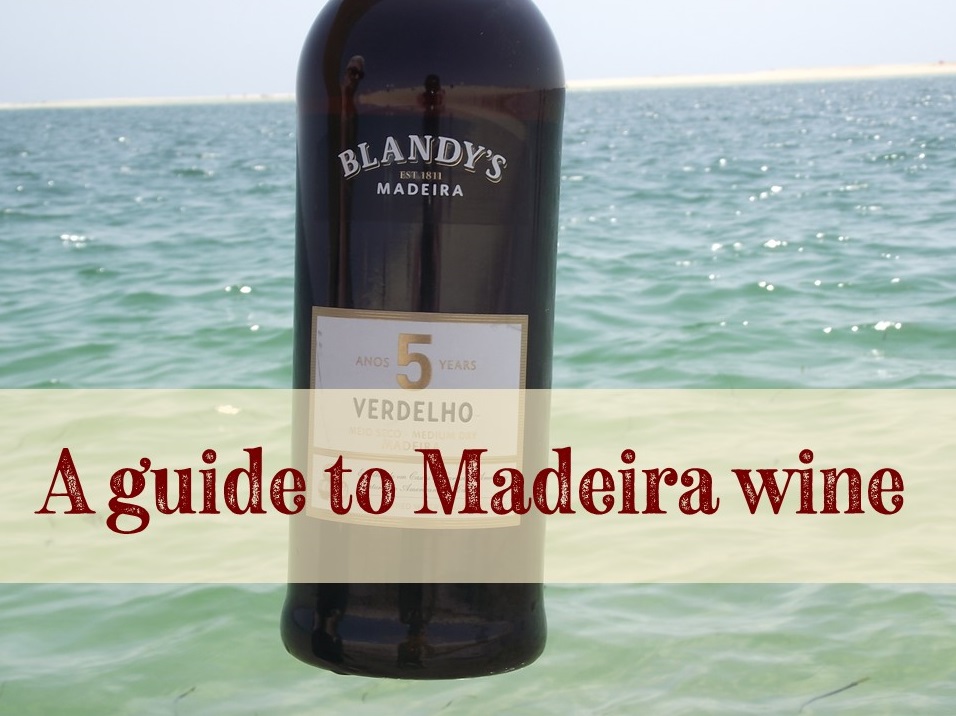
Blandy’s – 5-year-old – Verdelho
No Comments Found